

Following the Trails of History Through Abandoned Civilizations
Uncovering the Mysteries, Legends, and Lessons Hidden in the World’s Lost Cities
The Timeless Allure of Ancient Ruins
Among the world’s most captivating landscapes lie the remains of civilizations that once thrived and vanished, leaving behind silent witnesses in stone. Ancient ruins and lost cities stand as reminders of humanity’s creative power and its fragility. They inspire fascination not only for their architecture but for the stories they hold, of people who built, ruled, and ultimately disappeared into history. Standing before a crumbling temple or a forgotten city street, travelers are invited into a dialogue across centuries. Every carved wall, every collapsed pillar, becomes a trace of memory, whispering about faith, conquest, trade, and survival. The ruins do not simply belong to the past; they continue to shape identity, culture, and imagination.
The allure of these places lies in their duality. They are tangible yet mysterious, preserved yet incomplete. Modern travelers often find themselves reflecting on the impermanence of greatness. The pyramids, colosseums, and ancient citadels tell the same universal truth: time spares nothing. And yet, what endures speaks to a shared human desire to build, to remember, and to be remembered. Exploring the remnants of lost civilizations is more than sightseeing, it is an act of listening to history that still breathes through the cracks of stone and sand.
Journeys Through the Lost Empires of South America
Few regions capture the spirit of rediscovery like South America, where jungles conceal the masterpieces of vanished empires. Machu Picchu, perched high in the Andes, remains one of the most recognizable archaeological wonders. Its precision-built terraces and temples defy the surrounding wilderness. For centuries, the citadel lay hidden beneath clouds and vines, preserved by isolation. The Incas constructed it with astounding engineering skill, aligning structures with celestial events and natural contours. Travelers ascending its stone stairways today sense not just beauty but reverence, a harmony between human ingenuity and the landscape itself.
Further north, deep within the Colombian rainforest, lies Ciudad Perdida, or the Lost City of the Tayrona civilization. Reached only after multi-day treks through humid valleys and rivers, it reveals circular terraces, ancient stairways, and an aura of mystery untouched by time. The journey itself mirrors the process of discovery, forcing travelers to slow down and observe as explorers once did. Across South America, from the Nazca Lines of Peru to the ruins of Tiwanaku in Bolivia, the continent invites visitors to decode messages left by societies whose knowledge of astronomy, agriculture, and architecture still challenges modern understanding.
The Enigmatic Cities of the Mediterranean World
Across the Mediterranean basin, ruins tell stories of commerce, philosophy, and empire. Greece and Italy serve as open-air museums of antiquity, where travelers walk paths once tread by scholars, soldiers, and poets. The Parthenon in Athens stands as a symbol of classical ideals, balancing precision and grace atop the Acropolis. Despite wars, earthquakes, and looting, its fragmented columns continue to define architectural perfection. In contrast, Rome’s Colosseum represents the grand spectacle of empire. Within its massive walls, gladiators fought, and crowds cheered, reflecting a society both advanced and brutal. Standing in its shadow, travelers confront the paradox of civilization, how progress and cruelty often coexist.
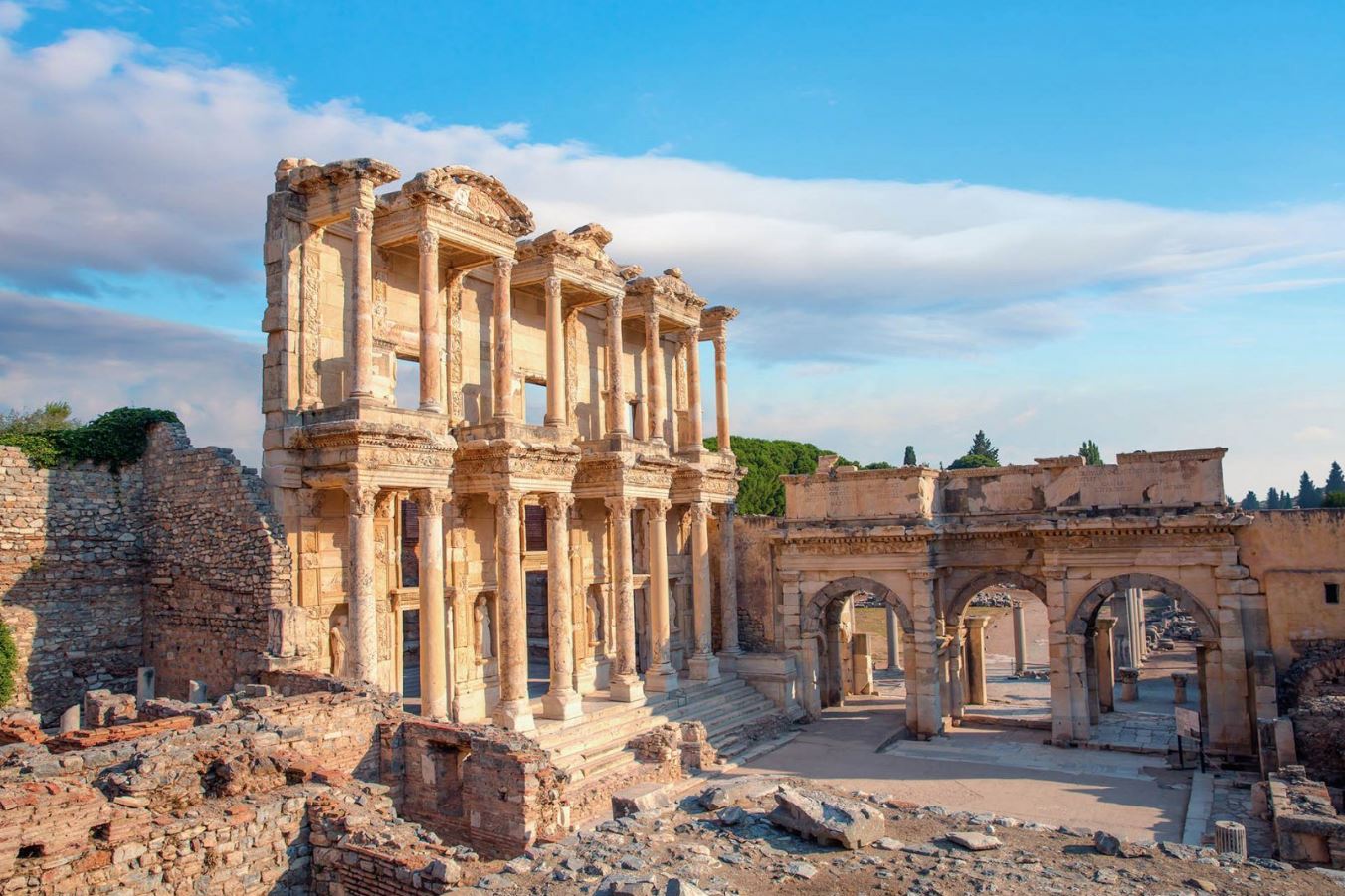
Farther east, Ephesus in modern-day Turkey offers one of the most immersive glimpses into daily life in the ancient world. Its marble streets, libraries, and theaters evoke a time when it was a thriving port city. Nearby, the ruins of Carthage in Tunisia whisper tales of rivalry between great powers. Each city bears layers of conquest and rebirth, showing how human ambition, though often destructive, also ensures continuity. The Mediterranean ruins remind visitors that cultural exchange has always been central to human advancement. The stones of these ancient cities remain as teachers, echoing lessons in resilience and transformation.
Lost Kingdoms Beneath the Sands of Africa
Across Africa, the desert preserves civilizations that once flourished at the crossroads of trade and knowledge. The Egyptian pyramids and temples along the Nile remain the most iconic, yet they represent only part of the continent’s archaeological legacy. Far to the south, the ruins of Great Zimbabwe tell another story, one of African innovation and power. Its towering stone walls, constructed without mortar, once enclosed a thriving city that traded gold and ivory across distant coasts. The site challenges outdated narratives, proving that advanced urban centers developed independently across the African continent.
In Sudan, the ancient kingdom of Kush left behind pyramids at Meroë that rival Egypt’s in beauty and complexity. The sands of the Sahara have also hidden entire trade networks that connected West Africa to the Mediterranean. Cities like Timbuktu, though no longer lost, evoke the same wonder as forgotten ruins. Their libraries once housed manuscripts on astronomy, medicine, and philosophy, evidence of intellectual brilliance long overshadowed by colonial narratives. For travelers, exploring Africa’s ancient ruins is not just a historical pursuit, it is a journey toward reclaiming forgotten heritage and recognizing the diversity of human achievement.
The Forgotten Civilizations of Asia
Asia’s vast landscapes conceal remnants of civilizations that shaped both myth and reality. In Cambodia, the temples of Angkor represent one of humanity’s most awe-inspiring architectural achievements. Built by the Khmer Empire, Angkor Wat and its surrounding complexes stretch across dense forests, adorned with carvings that depict celestial dancers, deities, and everyday life. The site’s scale and artistry reflect a civilization that balanced spiritual devotion with technical mastery. Nearby, the lesser-known city of Ayutthaya in Thailand tells another tale of rise and fall. Once a global trading capital, it was destroyed by invasion, its temples left to crumble beneath banyan roots that now weave through the ruins like veins of memory.
Further east, the ancient city of Xi’an in China holds the Terracotta Army, thousands of life-sized soldiers buried with the first emperor, Qin Shi Huang. Each figure, uniquely detailed, stands as a symbol of imperial ambition and the human desire for immortality. In the deserts of Central Asia, remnants of the Silk Road reveal ruins of cities that once connected continents through trade and culture. From the Buddhist caves of Dunhuang to the abandoned fortress of Merv in Turkmenistan, Asia’s lost cities remind travelers that the exchange of ideas has always been civilization’s greatest legacy.
Europe’s Hidden Ruins and Medieval Mysteries
While Europe is often associated with castles and cathedrals, its deeper past hides beneath forests, fields, and hills. The prehistoric stone circles of Britain, including Stonehenge and Avebury, continue to confound scholars with their purpose and precision. They are monuments not of conquest, but of cosmic alignment and ritual. Across the continent, ruins of Roman outposts, Celtic hillforts, and Viking settlements tell stories of cultural convergence. In Eastern Europe, the crumbling remains of medieval monasteries and fortresses mark territories once fought over by empires and tribes. Each ruin speaks not only of destruction but of adaptation. The stones reused in modern towns carry echoes of their former lives.
In the Balkans, forgotten cities like Butrint in Albania and Apollonia in Bulgaria reveal the complex layering of history, from Greek foundations to Roman rule and Byzantine renewal. Further north, the ruins of Gothic and Renaissance towns abandoned by shifting trade routes stand as open-air museums of time. Europe’s ruins are often intertwined with myth. Legends of Avalon, Atlantis, and El Dorado reflect the human longing to rediscover what has been lost. To explore these sites is to step into a continuum where myth, archaeology, and imagination merge seamlessly.
Modern Archaeology and the Rediscovery of the Past
Advances in technology have revolutionized how the world rediscovers its buried histories. Tools like LiDAR, satellite imaging, and ground-penetrating radar have unveiled lost cities once thought mythical. In the jungles of Guatemala, researchers recently mapped vast Mayan networks hidden beneath vegetation, revealing cities connected by causeways and canals. In the deserts of the Middle East, digital archaeology has identified forgotten trade hubs along ancient caravan routes. Even underwater, divers and scientists uncover submerged cities along Mediterranean and Asian coastlines, evidence of how civilizations once thrived before sea levels rose. Each new discovery reshapes humanity’s understanding of its own timeline.
Yet the process of rediscovery also carries responsibility. Archaeological exploration today must balance curiosity with preservation. Looting, tourism, and climate change threaten fragile sites. Governments and communities increasingly collaborate to protect cultural heritage. Visitors, too, play a role in ensuring that exploration does not become exploitation. The past, after all, belongs to everyone. Modern archaeology is not about conquest but connection. It reveals how closely intertwined civilizations have always been, and how their lessons can guide the present. Through ruins, humanity sees both its greatness and its vulnerability mirrored in stone.
The Emotional Experience of Standing Among Ancient Ruins
For many travelers, the first encounter with an ancient ruin is deeply personal. The sense of scale and silence creates a moment of reflection. Standing before a collapsed temple or a deserted street, one feels both small and eternal. The weight of time becomes tangible. Unlike modern monuments, ruins invite imagination. They do not dictate meaning but encourage questions. Who lived here? What did they believe? How did they fall? The beauty lies in the ambiguity. The stones, weathered and worn, evoke empathy across ages. They remind visitors that history is not a straight line but a series of cycles, creation, decay, and rediscovery.
Some describe a spiritual connection to these places. The energy of human endeavor lingers in the air, felt in the geometry of walls and the precision of carvings. Even ruins stripped of grandeur possess dignity. They endure storms, invasions, and neglect, yet still stand. For travelers seeking authenticity, ruins offer something rare, a space untouched by modernity, where imagination fills the gaps that history leaves blank. It is in these quiet places that many rediscover a sense of continuity between themselves and the countless lives that came before.
Why Lost Cities Continue to Shape the Traveler’s Imagination
The fascination with ancient ruins endures because they bridge the known and the unknown. They speak to humanity’s desire to understand its origins while confronting its impermanence. Each ruin tells a story not only of what was built but of what was lost, reminding travelers that civilization is both fragile and resilient. The world’s forgotten cities, from Angkor to Pompeii, from Petra to Palenque, stand as mirrors reflecting both triumph and humility. To walk among them is to walk through time, where every broken column and faded mural becomes a testament to endurance. The appeal lies not in perfection but in the unfinished. Ancient ruins, in their silence, continue to invite discovery, imagination, and awe. They remind travelers that the past is never truly gone, it waits beneath the surface, ready to be found again by those who listen carefully to the whispers of stone.